Implementing functional safety by means of achieving a certain safety integrity level (SIL) is a matter of reducing risks. On the software side this results among other things in the adoption of a language subset, which often is a required SIL … [Continue reading]
Adopting MISRA-C guidelines in your software development process – best practices
November 26, 2012 by 1 Comment
The relay
November 22, 2012 by Leave a Comment
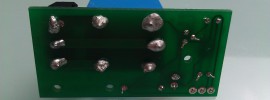
Introduction A relay – in this context – is an electronic switch and can be controlled by micro-controller logic. There are different types of relays, with different pin configurations. A 4-pin relay can be OFF (not conducting current) or ON … [Continue reading]
Some basic hands-on experience with a dump load
November 15, 2012 by 2 Comments

Introduction The dump load (already introduced here) is used to burn the excess energy of our battery charger. The excess is typically generated by the wind turbine in windy conditions. In contrast with solar energy, the battery charger must accept … [Continue reading]
Development: a mixed top-down, bottom-up approach
November 8, 2012 by Leave a Comment
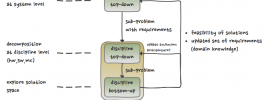
Introduction In a previous post we proposed our RTOS engineering process: a lean and iterative process, which cycles between project management and development (see Figure). In this post we describe our development approach that can mitigate the … [Continue reading]
Charge controller system architecture
November 1, 2012 by Leave a Comment
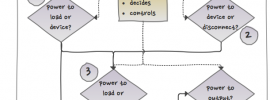
Documenting architectures Architectures are documented by views, and so that is how we proceed too. The goal of a view is to describe the system from the viewpoint of its stakeholders. Several architectural view models exist and probably the most … [Continue reading]
Review: Requirements Management with Enterprise Architect 9.3
October 25, 2012 by 1 Comment
Introduction In order to manage the requirements of our energy harvester project we use Enterprise Architect (EA) from Sparx Systems, an Australian company. Enterprise Architect is a (UML-based) modeling and design tool which … [Continue reading]
From stakeholder to system requirements
October 17, 2012 by Leave a Comment
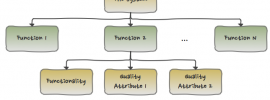
System requirements and their organization Given our stakeholder requirements and some basic domain knowledge, we can now initiate the system requirements. Instead of extending the rather informal and unstructured stakeholder requirements, we … [Continue reading]
Domain knowledge and application information
October 11, 2012 by Leave a Comment

Introduction Building the right product requires customer input and domain knowledge. Building the product right requires a technical expertise and (possibly) a development process. In this post we focus on improving our domain knowledge. As … [Continue reading]
Stakeholder requirements
October 4, 2012 by Leave a Comment

Introduction End-users, developers, testers, production, project managers, business, sales... they all have their interest in the system and are called stakeholders. At first, it is the task of the system architect to collect those interests … [Continue reading]
The start of a €100,000 project
September 27, 2012 by Leave a Comment
Scope “Yeah sure, we can fly to the moon too!”, answered a colleague once to an unreasonable customer question. Not the most diplomatic answer but – up to a certain point – he was right: sometimes you have to stop dreaming and reconsider the … [Continue reading]




Recent Comments